Construction Pieces
Frequently Asked Questions
Why 4-layer?
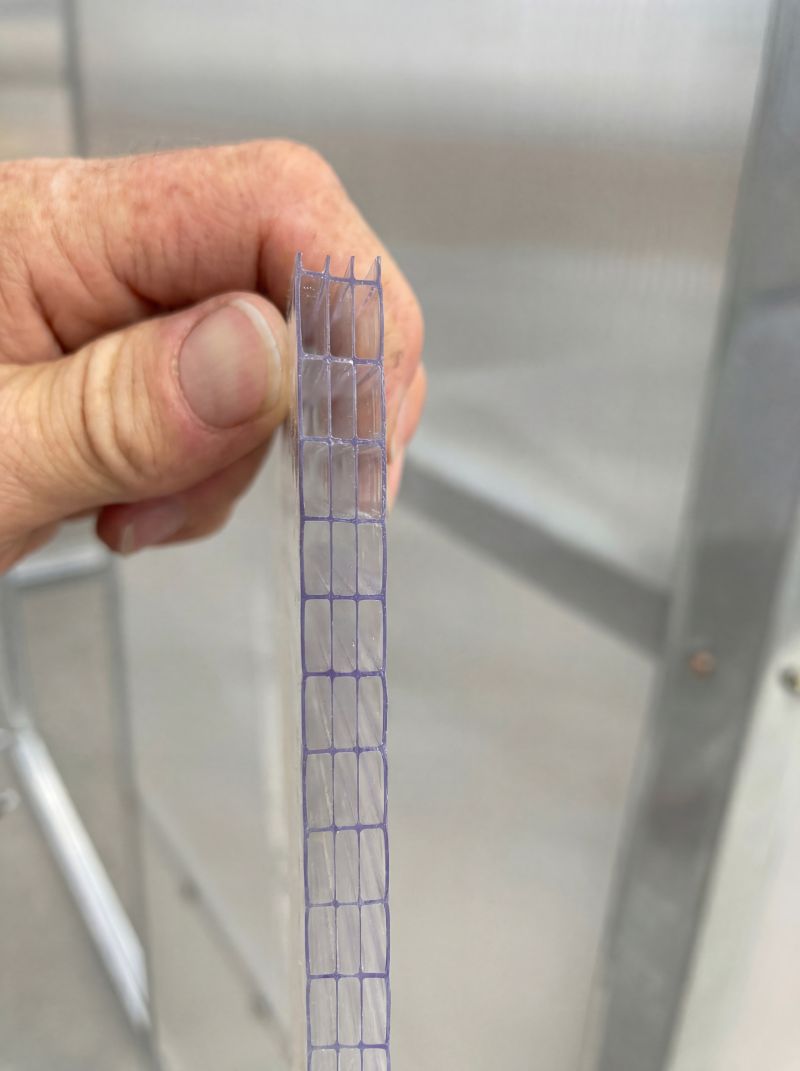
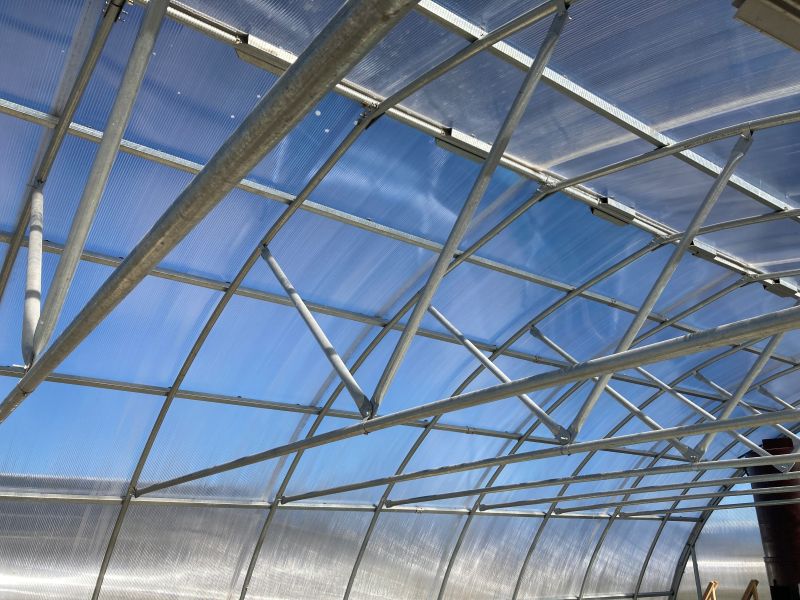
4-layer Polycarbonate (PC) is recommended for clear and dry areas, not necessarily for cloudy regions. This is because its transmissibility is 71%. The intermountain west's dry atmosphere means energy losses occur primarily through thermal radiation. Higher R-value 4-layer PC (R2.2) delays these radiative losses, making it an optimal glazing for our region.
Is shade cloth necessary?
We don't use shade cloth with our 4-layer PC greenhouses, though some growers do. In our experience, if plants are well-established by spring, shade cloth isn't worth the cost or installation effort for most operations. The 4-layer PC already filters out about 29% of incoming light, providing sufficient shading on its own.
Why use PC instead of PE?
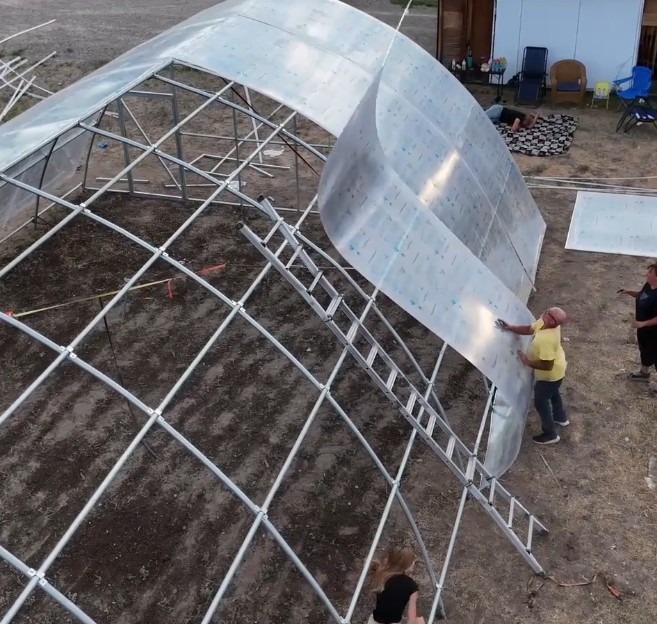
Polyethylene becomes cloudy after a few years and requires frequent replacement. It offers minimal cold protection and is easily torn by wind or impacts. In contrast, PC withstands impacts that would destroy PE and provides superior insulation through trapped air pockets. PC also lasts substantially longer—often a lifetime material rather than a temporary solution.
Does PC get UV damaged?
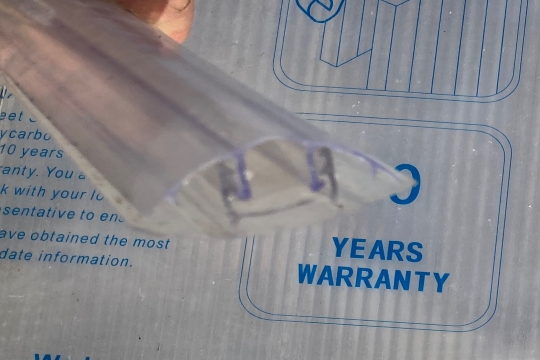
Each panel features a 50 μm UV-resistant coating that must face upward during installation to prevent sun damage. This protective layer gradually erodes over time, which is why PC doesn't last as long as glass. While the material will yellow with age, it can remain functional for decades if discoloration isn't a concern.
Are our kits PE stamped?
No. These kits aren't Professional Engineer (PE) stamped, but they're designed to exceed typical NRCS high-tunnel standards. Most states have agricultural exemptions that prevent local jurisdictions from prohibiting farm structures. However, owners assume liability for managing extreme weather events, such as removing heavy snow loads from greenhouses.
Are we more expensive?
The NRCS cost-sharing program currently (2026) provides up to $8,000 for a 1,000-square-foot high tunnel. Budget high tunnels available online may seem like bargains, but often exclude end-wall and bottom side-wall materials. They also use single-layer PE that typically lasts only four years. Our greenhouses come complete with all materials and are built to last a lifetime—no hidden costs.
Do you recommend wood?
No. If you live in a cold climate and plan to grow year-round, invest in galvanized steel or pressure-treated wood from the start. Even cedar and redwood will rot in greenhouse conditions due to freeze-thaw cycling. Daily melting frost from the glazing drips onto the wood, causing rapid deterioration.
Do you recommend HF kits?
Yes. Harbor Freight greenhouse kits are a great starting point—120 ft² for about $1,000. They use inexpensive 4mm 2-layer glazing and lightweight frames that won't withstand high winds or heavy snow in most areas, but they're an excellent way to learn the basics. Once you've gained experience with them—particularly after they blow over or collapse under snow—contact us.
Do the kits handle snow?
Yes. This YouTube video demonstrates how easily snow slides off the PC's smooth surface. Our greenhouses have weathered extreme snowstorms without issues, even with hoop spacing up to 79". Simply monitor snow accumulation during heavy storms as a precaution, but you'll likely never need to intervene.
What about hail?
The PC won't withstand extreme hail, but you're unlikely to see punctures through all four layers. The 6mm 4-layer glazing is rated for 1-2 mm diameter hail (depending on velocity) at a minimum. QC performs hammer tests on each batch to ensure adequate resistance. We've experienced much larger hail at our farm without damage, though no material can survive truly extreme events.